
How to Track Your Money Goals Without Losing Your Mind
Why Financial Goal Tracking Is the Key to Actually Reaching Your Money Goals
Financial goal tracking is the practice of setting clear money targets, monitoring your progress over time, and adjusting your plan so you actually get there.
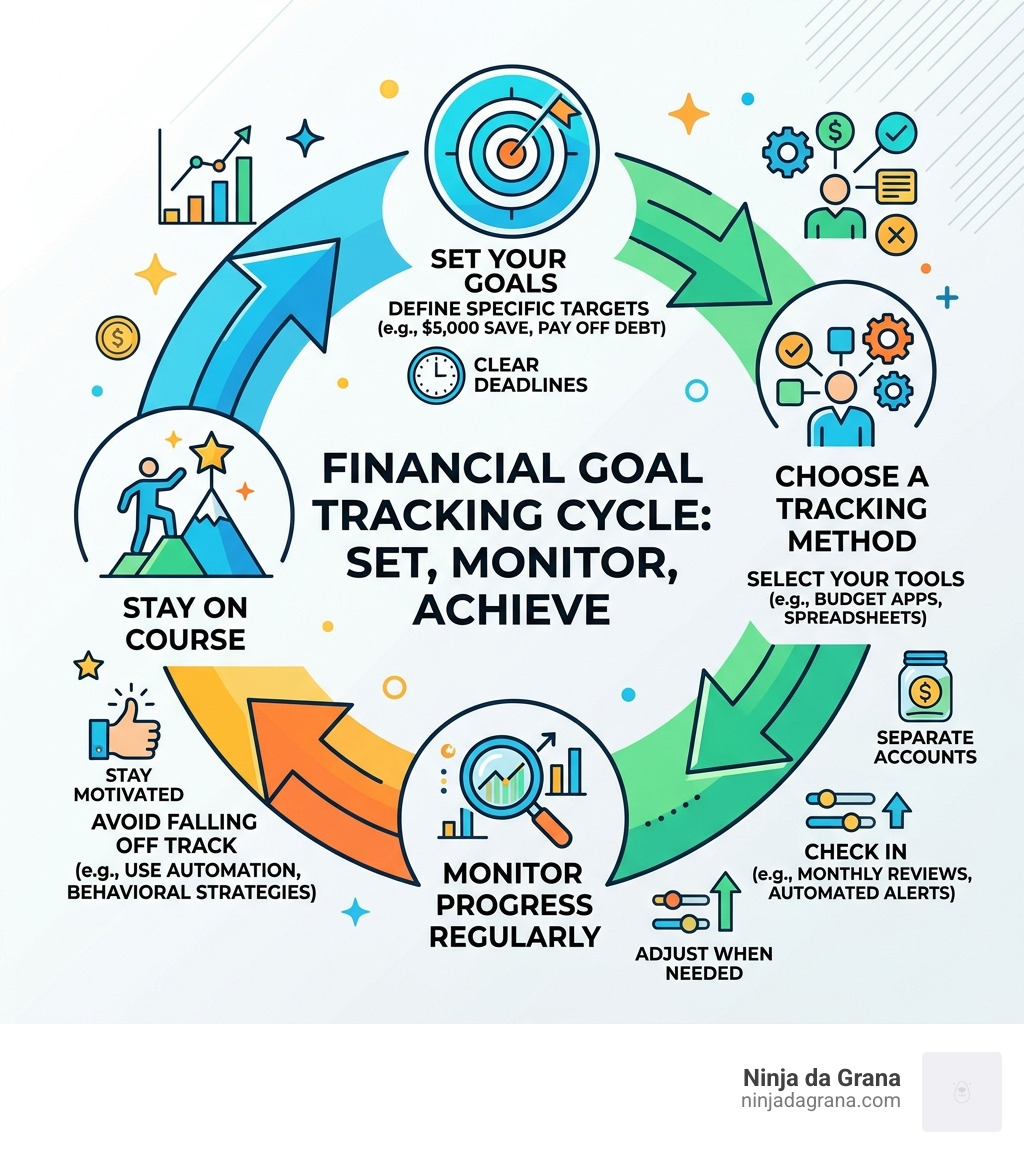
Here’s a quick overview of how it works:
- Set your goals — Define what you want (save $5,000, pay off debt, buy a home) with a clear deadline
- Choose a tracking method — Apps, spreadsheets, separate savings accounts, or a mix
- Monitor progress regularly — Check in monthly, adjust when life changes
- Stay on course — Use automation and behavioral strategies to avoid falling off track
Think about this: roughly half of Americans don’t have a written financial plan. That’s not because people don’t want financial security — it’s because managing money feels overwhelming, especially when you’re busy.
Life moves fast. Bills pile up. Spending sneaks away from you. And before you know it, that vacation fund or emergency cushion you meant to build is still sitting at zero.
The good news? You don’t need to be a finance expert to take control. With the right tools and a simple system, tracking your money goals becomes something you can actually stick to — and even enjoy.
This guide walks you through exactly how to do that.
The Foundation of Effective Financial Goal Tracking
Before we dive into the flashy apps and complex spreadsheets, we need to build a solid foundation. You wouldn’t build a house on sand, and you shouldn’t build your financial future without a sturdy framework. As of April 2026, the economic landscape continues to shift, making a written plan more vital than ever.
The SMART Goal Framework
The first step in financial goal tracking is defining what you are actually tracking. We recommend using the SMART framework:
- Specific: Instead of “I want to save money,” try “I want to save for a down payment on a house.”
- Measurable: Attach a dollar amount. “$30,000 for that down payment.”
- Achievable: Is $500 a month realistic for your current income?
- Relevant: Does this goal align with your long-term life plans?
- Time-bound: Give yourself a deadline. “By December 2029.”
Categorizing by Time Horizon
Not all goals are created equal. We find it helpful to categorize them by when you need the money. This changes how you track them and where you keep the cash.
| Goal Type | Timeframe | Examples | Tracking Priority |
|---|---|---|---|
| Short-term | Under 1 Year | Emergency fund, holiday gifts, minor car repairs | High (Weekly/Monthly) |
| Mid-term | 1 to 5 Years | New car, house down payment, wedding | Medium (Quarterly) |
| Long-term | 5+ Years | Retirement, child’s college fund, paying off mortgage | Low (Annual/Semi-annual) |
The 50/30/20 Rule
How do you fund these goals? A classic starting point is the 50/30/20 rule. We suggest allocating 50% of your take-home pay to needs (rent, groceries, utilities), 30% to wants (dining out, hobbies), and 20% to savings and debt repayment. If you can track your spending and keep it within these bounds, your goals will almost track themselves!
The Emergency Fund: Your Financial Safety Net
Experts generally recommend saving three to six months’ worth of essential expenses in an emergency fund. However, if you are self-employed or have an irregular income, we suggest aiming closer to 12 months. This cushion ensures that a flat tire or a medical bill doesn’t derail your long-term financial goal tracking progress.
Top Tools and Resources for Progress Monitoring
Once your goals are set, you need a way to see how you’re doing. You don’t have to do the math in your head! There are incredible resources available to make this process seamless.
- Savings Goal Calculators: Tools like the one found at Investor.gov allow you to input your goal amount, initial investment, and interest rate. It will tell you exactly how much you need to contribute monthly to hit your target.
- CFPB Toolkit: The Consumer Financial Protection Bureau (CFPB) offers a “Your Money, Your Goals” toolkit. It includes fillable PDFs for tracking income, benefits, and even a bill calendar to ensure you never miss a payment.
- Automatic Transfers: This is the “secret sauce.” By setting up automatic transfers from your checking account to your savings accounts on payday, you remove the “choice” to spend that money elsewhere.
- Separate Savings Accounts: Many modern banks allow you to open multiple “buckets” or sub-accounts. We love this because it uses “mental accounting” to prevent you from accidentally spending your “Vacation Money” on a new pair of shoes.
Leveraging Digital Platforms for Financial Goal Tracking
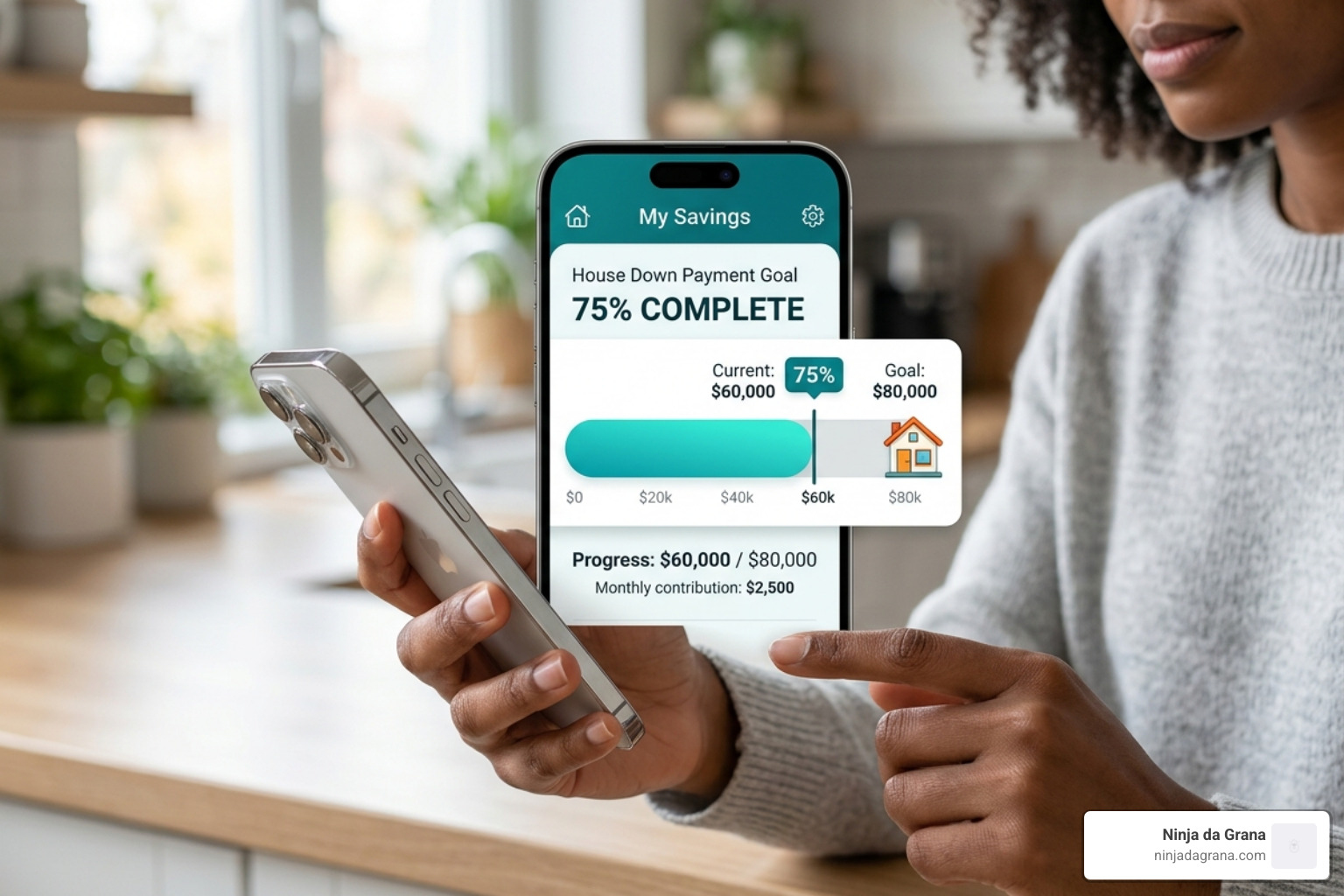
In 2026, mobile apps have become the command centers for our wallets. Platforms like Personal Finance Tools, Wealth Management, Guides | Personal Capital allow you to link all your accounts in one place.
Digital tools offer several advantages:
- Real-time Updates: See your net worth fluctuate as markets change.
- Transaction Categorization: Most apps use AI to tag your “Starbucks” run as “Dining Out” automatically.
- Monthly Insights: Get a “report card” at the end of the month showing if you stayed under budget.
- Debt Logs: Specialized tools can help you visualize the “debt snowball” or “debt avalanche” methods, showing you exactly when you’ll be debt-free.
Using Spreadsheets for Personalized Financial Goal Tracking
While apps are convenient, some of us prefer the “DIY” approach. Excel and Google Sheets remain the ultimate tools for personalized financial goal tracking.
Why use a spreadsheet?
- Custom Formulas: You can build a dashboard that tracks exactly what you care about.
- Data Privacy: Your data stays in your file, not on a third-party server.
- Pivot Tables: For the data nerds among us, pivot tables allow you to slice and dice your spending habits to see exactly where the leaks are.
- Manual Entry: There is a psychological benefit to typing in your expenses. It forces you to confront your spending choices, which often leads to better discipline.
The Behavioral Science of Money Management
Why is it so hard to stick to a budget? It’s usually not a math problem; it’s a brain problem. Understanding the “why” behind our spending can make financial goal tracking much easier.
Mental Accounting and the RAS
“Mental accounting” is a behavioral finance term for how we treat money differently based on its “source” or “intended use.” By naming a savings account “Dream Hawaii Trip,” your brain attaches more emotional value to it than a generic “Savings” account.
Furthermore, your Reticular Activating System (RAS)—a bundle of nerves in your brainstem—acts as a filter. When you focus on a goal (like saving for a house), your RAS starts noticing opportunities to save or earn more that you might have previously ignored. It’s like when you buy a red car and suddenly see red cars everywhere!
Overcoming Emotional Spending and Procrastination
We’ve all been there: a stressful day at work leads to an “add to cart” spree. To fight this:
- The 24-Hour Rule: Wait 24 hours before any non-essential purchase over $50.
- Positive Mindset: Instead of thinking “I can’t buy this,” think “I am choosing to buy my future freedom instead.”
- Celebrate the Wins: When you hit a milestone, celebrate! We might suggest a scoop of ice cream to mark the occasion. Small rewards keep the motivation high.

Frequently Asked Questions about Financial Progress
How often should I review my financial progress?
We recommend a tiered approach.
- Monthly: Check your spending against your budget. Did you stay within your 50/30/20 limits?
- Quarterly: Review your mid-term goals. Are your investments performing as expected?
- Annually: Do a deep dive. Has your income changed? Do you need to adjust your SMART goals for the coming year? Life changes—like a new baby or a career shift—should always trigger a plan review.
What are the best free resources for tracking debt?
The CFPB’s “Your Money, Your Goals” toolkit is an excellent free resource. It includes debt logs, a debt-to-income calculator, and action plans to help you negotiate with creditors. Additionally, many banks now offer free credit monitoring and debt-tracking tools within their own mobile apps.
How do I track goals with an irregular income?
If you’re a freelancer or gig worker, financial goal tracking requires a bit more flexibility.
- Use a Cash Flow Budget: Track when money comes in versus when bills go out.
- The 12-Month Emergency Fund: As mentioned, a larger cushion is vital to smooth out the “lean” months.
- Income and Benefits Tracker: Use a dedicated spreadsheet to track every payment and set aside 25-30% immediately for taxes.
Conclusion
At Ninja da Grana, we believe that mastering your money shouldn’t be a source of stress. It should be a source of power. By combining practical tools—like separate savings accounts and automatic transfers—with an understanding of how your brain works, you can turn your financial dreams into a reality.
The most important step is simply to start. Whether you’re using a high-tech app or a simple notebook, the act of tracking is what creates the habit of success.
